Thursday, 24 August 2017

Another year, another book sale


Yes indeed. I’ve got to tell you, I hit the motherlode this year. In the music section amongst the old black and white fan books and the boring rock encyclopaedias, what did I find but this gem: “Rip It Up and Start Again; Postpunk 1978-1984” by Simon Reynolds. It’s probably not much of a find really since it was published in 2005, but I still get a buzz out of going into a warehouse filled with 95% trash and finding the hidden gems scattered among it, so to me this is huge. Best $2 I’ve ever spent. I've scanned my copy for the photo – note colour fading and water marks on the side. Awesome. It was obviously very well-loved prior to me getting my mitts on it. I hope that person went out and started a band off the back of it.
Rip it up and start again
This is a book you need to read. Not only has Mr Reynolds come up with the most informed and informative book on this essential period of music, but he has done it with generous dozes of humour and some great anecdotes. If I am going to criticise it at all I’d say his focus is weighed more towards the indie side of things at the expense of some of the better known artists, but that’s an editorial call he had to make to keep the book manageable. As a result, anyone that veered closer to the mainstream, major label deals and/or international success is more or less side-lined. This means the likes of The Clash, The Psychedelic Furs and XTC only get mentioned in passing. The latter especially get treated pretty shabbily, being dismissed as a skinny-tie new wave band. That’s a crime I find it hard to forgive him for, but otherwise he hits the mark pretty well and leaves plenty of space for you to form your own opinions. That’s the beauty of music. There are no right answers and everyone is free to develop their own reality around it. No one should ever be lambasted for having an opinion different to yours (unless they are completely ignorant of course. Citizens of Dumbfuckistan take note).
One of the best parts of this book is actually the introduction where he produces a vivid assessment of the cultural and political flavour of the times, and describes the burning need for musicians to seize the time they were living in and use it as a launching pad into the future. Just as the counter-culture did in the 60s, postpunk tapped into the zeitgeist of the times and brought it to life. In fact it largely defined it, or at least provided a soundtrack for it. The cold-war, Ronnie and Maggie, unemployment, new technology and future shock. It’s all there in the sounds produced by musicians desperate to capture the changes happening around them. Not escape from them as they did in the 60s. Define them.
The period in question is a distinct time capsule. You can see the start and finish of it all. It kicks off with the Sex Pistols last stand in January 1978 and careers on a wild thrill ride until 1984, when all that was left were the mascara stains on Frankie’s stonewashed jeans. The energy had burned itself out, snuffed by the rise of big money labels and MTV giving people a clear career path to Pop Stardom. Being a creative artist became untenable as the corporates bought up the indies. It was back to the dole queue or Tescos for most. For a sequel, someone needs to write a book covering the wilderness years up to the end of the 20th Century. It might have been done for all I know. Maybe next year’s book sale. Can’t wait!

One thing that came home reading this book is that postpunk music was deliberately agnostic of its roots. In hindsight that was a big mistake and gave rise to big fat lies like “the early 70s were an embarrassing cultural wasteland” and “the 60s were all about self-indulgent hippy dreamers”. Nothing, of course, is further from the truth, as we all know now from our vantage point nearly 50 years after the fact. Back then though, people’s perspective was a bit distorted. If postpunk hadn’t developed from the Stalinist philosophies of the punk movement it might have soared to even higher levels of achievement than it did. It’s no coincidence that the most enduring postpunk bands were the ones that absorbed their influences from their 60s-70s roots, or from long established cultures in other places like reggae and funk. That’s the lesson my little guys try to get across: you should never cut yourself off from anything. Even the most hideous thing can produce something that influences you – even if it is a lesson to avoid it at all costs and do the opposite. Find out what that sounds like in any of the other posts on this blog:

Who the hell?
Amerikaemia
Serf City
The Hopkinsville Goblins are Back!

Monday, 14 August 2017

Serf City


Nice to see you back. It’s been a while. Apologies for the long gap between posts. I’ve been out in the barn putting the finishing touches on some new material for your listening pleasure. This post is a heads up about the new single release from The Hopkinsville Goblins, “Serf City”, tied to some wider thoughts on the current state of things.
It’s ironic that this is the second release in a row of a political nature given how much my little guys hate politics. They see politics as a surrealist circus at best and a dance of death at worst. The truth probably lies halfway in between. Let’s face it. Democracy is basically a lottery in which you risk giving people you wouldn’t ordinarily piss on the power to control your destiny. I guess it beats fascism, but there are some sliding scales of democracy so you need to be careful what you are talking about. Democracy at best is an illusion derived from the clever use of statistics. There hasn’t been a real mandate for any government to rule in any world power for longer than anyone can comfortably remember. Last year saw the big backlash against this, but the effect was even worse than the cause. Rock to the left, hard place to the right.
This is why the Hopkinsville Goblins have based themselves in New Zealand. It’s so far away from the international centres of madness that you can breathe a little and observe impartially. The flip side of this is that it is so far away from the action that it can be a bit dull.
But have no fear. After the insanity around the world throughout 2016, the good people of New Zealand are now facing their own political circus in September this year. Yes, we get to choose from the same parade of ego-maniacs, carpet-baggers and crooks that have always called parliament home, plus the clutch of do-gooders who try (and fail) to keep it real. All of this taking place while the country slides ever further into third world status. Possibly an exaggeration, but it wouldn’t surprise me if smallpox makes a comeback here first, or some new and unknown super, resistant-to-everything bug busts out here to decimate the tiny population as a warm up to taking down the rest of the planet. Plague and poverty are ours for the taking.
But I digress as usual.
The Hopkinsville Goblins have a new single out. It’s a thinly disguised stab at life in New Zealand’s largest city – a place now so absurdly over-priced that even its own residents can’t afford to live there. For the few that can it’s probably a really nice place to be, although it does tend to rain a lot. For everyone else it’s … well, get the single and you can sing along to the chorus.

Let them eat lamingtons on the last bus home:
I-Tunes, Spotify, Apple Music, Google Play or check it out on Youtube.
 

Taken from the new Hopkinsville Goblins album, out now!


Wednesday, 22 February 2017

Dub'n XTC


Given recent world events you wouldn’t be blamed for wanting to disappear to another space and time. Somewhere free from megalomaniac billionaires and where Prince, Bowie and Lemmy where still producing the goods. I think I’m still in the denial stage of grief about 2016 as a year. Escape isn’t an option of course and unfortunately you just have to deal with the hand you are dealt.


I’ve been trying to clear some mental space to work in lately. It’s good therapy. My little guys have been leaving me the sketches for some new stuff and I need to have a nice big barn to play in. The easiest way I found of taking your head to another space and time is to immerse yourself in dub. Some might call it escapist, I call it a holiday. And not just in the Jamaican sense of a holiday, (although the best dub obviously has that connecting flight), I mean an otherworldly holiday. The best dub will take you anywhere you want to go. When I listen to serious dub I often find myself wandering in a nocturnal forest where the trees have lost their leaves and a distant city provides the only source of light and noise. I’ve got no idea why – I don’t analyse stuff like that. If it’s good to you why fight it.


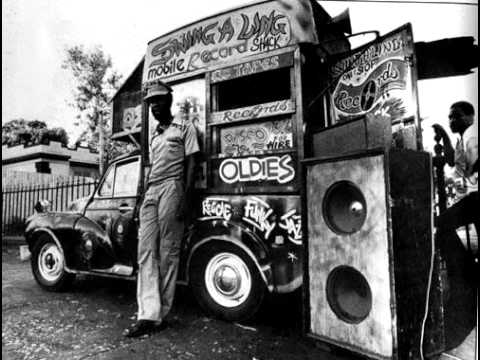
Old school Jamaican studio
Now I know what you are thinking, and no, you don’t have to hit the herbal highway to go places with dub. Legendary dub master King Tubby never touched the stuff when he was working in his studio. The same can’t be said for Lee Perry, but then he was on a planet of his own to start with. What most of the early dub masters had in common was a root in DIY electronics. They were studio technicians interested in manipulating sound with home made devices. They also happened to be in an environment where they largely had the freedom to make their own rules. Being very good at what they did didn’t do any harm either.


Sound system
Commercially dub is a non-starter. It works best in a live situation. It started out as an add-on to the top hits of the day played at Sound System parties in Jamaica. People wanted to hear an extended groove so they could dance it out some more. That completed, the DJ would talk/sing over the track to take it to wherever the crowd wanted it to go. That gave rise to the whole toaster genre in Jamaican music. Basically a direct parallel to the first rappers at US block parties. The root of it all goes back to the studio and the electronic wizardry applied to turn the rhythm track into a stand-alone piece of music. Let’s face it 3-4 minutes of bass and drums would be nothing without some added highlights, no matter how cool the bassline is.
The first dub LPs were pretty basic affairs along the lines described above. That was until the aforementioned King Tubby and Lee Perry began developing their studio techniques on the rhythm tracks they had open access to in their studios. Pretty soon dub versions were the essential companion to the standard commercial release for any artist’s work, and toasters like I-Roy, Big Youth and U-Roy became established as artists in their own right.
Scientist
There is enough classic dub available on Youtube to keep you going for the rest of your life. A lot of it consists of vinyl rips off scratchy copies of rare, long out of print LPs, but that isn’t a problem. It does highlight the need to look after your vinyl and get a decent turntable though, but that’s another matter. Start searching on King Tubby, Scientist, Prince Jammy and Lee Perry and go from there. You’ll soon notice that each dub master has their own signature sound that’s as recognisable as a fingerprint.
Slum
I hate the concept of ‘the best’, but my favourite dub LP is Slum which features Gregory Isaacs tracks dubbed by Prince Jammy. It’s filed as a Gregory Isaacs LP but his voice hardly ever appears across any of the ten tracks. It’s a brilliant piece of music on its own because of the intricate balance between the studio effects alongside the original tunes and brief vocal snatches. It’s more than simply dub in other words. Lee Perry uses a similar approach, but his works are much denser and less focussed, and his output is so vast it’s hard to know where to start. Scientist and King Tubby are strictly dub. Their dubs are what people think of first when they think of dub as a concept. King Tubby came first but Scientist took it further.
Mad Professor
The influence of reggae on the British punk movement in the late 70s is pretty well documented and it’s safe to say it was a symbiotic relationship. The Clash and The Ruts took to it wholeheartedly both musically and culturally. So did The Slits but they were horrid. Others watered it down but managed to produce some worthwhile stuff. But what of dub in all this? Well, it did make it across to Britain too, but its influence wasn’t as far reaching. Its most obvious influence, outside of local reggae outfits, came out in groups like PiL and the Pop Group with a stripped down bass and drums approach to song writing, but there were only really a couple of Jamaican-style British dub masters. Of these Mad Professor is the most prolific, producing a staggering number of LPs over a long period of time, and turning dub into live performance while he was at it. His take on dub is genius along the lines of the Slum LP above – adding as much new stuff as he took away to make each track a new composition in what’s almost a jazz style. Check out any of the twelve volumes of his Dub Me Crazy series to see what I mean. The work of Denis Bovell with dub poet Linton Kwesi Johnston is also essential. This takes toasting into slightly more serious territory, but still delivers the goods at the bottom end.
Take Away
I'm going to end this very scholarly post with XTC. ‘Why?’ I hear you ask. The reggae influence in XTC’s sound is limited to a couple of singles and some LP tracks, and it’s often so well disguised its unrecognisable, so why bother mentioning them here? Well, they are one of my favourite bands for one reason, but also because of a single side project completed by front man Andy Partridge in 1980 that uses dub principles to produce completely new compositions from mix ups of songs from their first three albums. Andy’s Take Away/Lure of Salvage is a real gem. Why more bands haven’t followed this course is a real mystery. Not having the talent could be one reason, but even Andy never tried to repeat it so perhaps it is just a solitary stroke of genius. Some of the tracks are better than the originals they are taken from, like New Broom which openly competes with their classic single Making Plans for Nigel, and The Rotary that kicks the hell out of its parent Helicopter. As a landmark of creativity the album stands as a little island of madness in a vast ocean of blandness. It’s long out of print but it was released (incompletely) as Explode Together on CD a long time back as an XTC disc. You need to hear it, and you also need to get the three LPs the original tracks come from while you are at it. Plus their fourth album Black Sea just because it’s so good. Did I mention they are one of my favourite bands? Google some live XTC bootlegs to see why they were one of the most dynamic live acts ever as well – they’ll be on Youtube. Most everything is.
As with all these posts there is a link back to Hopkinsville Gobins tracks. Find out why on Amazon, I-Tunes, Spotify, Deezer and Google Play, or from any of the purveyors of fine sounds listed on this site. You can also get your Paypal on at Bandcamp.
Or try before you buy on Soundcloud.
And don’t forget to check out Amerikaemia while you are at it. There will be a dub version of that coming up on their next project.


Thursday, 3 November 2016

Amerikaemia


The party stops here

Amerikaemia

Not so much a country as a state of mind. The FREEDOM to be as fat, stupid and greedy as you wanna be. Everything exists to be exploited and it’s your RIGHT to have it.

It’s nothing that a monumental shift in culture, politics and theology won’t fix.

I thought I would have to take this post down on 10 November, but now that the unthinkable has happened, The Hopkinsville Goblins will leave it up as a reminder that the end of civilisation as we know it is just one bad vote away.

Now there is a killer clown in the white house we really are playing Russian roulette with the future of the world. The equation: ignorance + greed + power = destruction.

The Hopkinsville Goblins have no claim to ownership of any of the material in this download. It is provided as a free community service for horrified onlookers everywhere.

Note this is generally pretty offensive so you've been warned.

Amerikaemia (Documentary sources with added grunch by The Hopkinsville Goblins)

We like it old school, so we’ve thrown in a B side as well.

For those of that might pray for help, a reminder that real divine feeling comes through the raw soul of primal rock’n’roll, no matter how many creeps want to tell you otherwise. And THAT freedom is owned by everyone.

The Voice of God (Iggy Pop/ James Williamson/ Ron Asheton/ Scott Asheton/ Traditional with added ankh by The Hopkinsville Goblins)

Download links below. Your choice to have different file types with artwork or just MP3s.


Or you can stream it on Soundcloud or Youtube.

Thursday, 20 October 2016

Prunes are good for you


I once picked up a book in a library sale about a mysterious branch of the arts called process music. I didn’t know anything about it but it looked intriguing and it was only a couple of bucks so what the hell. It turned out to be one of the most interesting reads I’d had for a long time.

Process music, it turned out, is music that is created with a physical or experimental set up to create sounds with a minimum of human input. A primitive example is the Victorian self-playing piano, the pianola, that used punched paper rolls to activate the keys. People have recently programmed robots to physically play entire compositions using a similar principle. The logical modern equivalent of the pianola is techno, using MIDI driven processing to produce sounds with a minimum of active playing by the, umm, musicians.

Early exponents of process music were more likely to be scientists than musicians, like Leon Theremin who invented the instrument that carries his name. Later exponents were the likes of John Cage who physically manipulated conventional instruments like pianos to produce unusual and dissonant sounds. Interesting as it sounds, process music can be as dull as dishwater to listen to (did I mention techno already?). It only becomes interesting when the process used produces sounds that are so far out your mind can’t work out how it is done, or so weird they produce a physical reaction like fight or flight (have you ever seen a dog prick up its ears and sniff the air when it hears a strange noise – that’s what we are talking about). Music isn’t an intellectual exercise – it has to reach organs below the neck as well.

Technology opened up all sorts of new doors to process musicians. Drum machines and delay units, echoplex and tape manipulation. Throughout the seventies these became the tools of the avant garde. I’m sure John Cage would have loved to have got his hands on a synthesizer rather than assaulting pianos with hammers and screwdrivers, (although the synth wouldn’t have been half as much fun). Manipulating sound is now as easy as a quick download and plug in to your sound editing software, and a MIDI keyboard can be made to sound like a brass band. The possibilities are endless right? Well, yes and no. Using technology for technology’s sake is where the edge gets rubbed off. Anyone worth their salt following a process to make music knows that there has to be a human hand behind it, otherwise there is nothing to feel.

This very long intro brings me to the main subject of this post: the industrial music of the early 80’s.


20 Jazz Fun Greats
Industrial music gets its name from Industrial Records – the label that was home to Throbbing Gristle in the late 70s – early 80s. Also included under this banner are groups like Clock DVA, Cabaret Voltaire, 23 Skidoo and (to a lesser extent) the Virgin Prunes, who I’ll get to later.
Throbbing Gristle are the grand daddies of industrial music (or grand trans-gender omni-sexual beings if you believe Genesis P Orridge these days). Their music basically defines the genre. Electronic rhythms splattered liberally with sound effects, warped instruments, snatches of dialogue and tortured vocals producing an overall effect like an analogue computer having a nightmare. Powerful stuff. The uninitiated should check out “20 Jazz Funk Greats” as a starting point. It’s their most accessible work (if accessible is even a word you can associate with TG) and features a few tracks you can even quietly get your groove on to. “DOA” also has its moments, particularly the uber-creepy Hamburger Lady and the almost poppy AB/7A (catchy title, eh). Serious devotees can try and track down the suitcase full of live cassettes they released that document just about every gig they did between about 1976 – 1980. If you dare.

Other industrial acts definitely have their moments, particularly Cabaret Voltaire who grew from a very noisy art assault collective into one of the gruntiest of the early house outfits (Prodigy owed their entire existence in the 90s to these guys). The Cabs largely sit outside process music, so their relevance here is limited to their first couple of albums and their love of using snatches of long wave radio dialogue in their compositions. “Mix Up” and “The Voice of America” are the ones to check out.

I could waste space talking about lesser known acts, but I want to spend the rest of this post talking about my homeboys the Virgin Prunes. My homeboys in a spiritual rather than physical sense you understand. I grew up (a while ago it has to be said) in the South Island of New Zealand. Things were pretty clear cut back then. You were a part a small population, you dressed conservatively, acted stoically and liked rugby. Or you didn’t. If you didn’t you needed to prepare yourself for a life spent on the outside looking in and being treated with the contempt that came with it. Even surviving that kind of shit was a challenge, let alone carving out a life for yourself. The Virgin Prunes came from Ireland, where you were part of a small population, you dressed conservatively, acted stoically and stuck to your creed. Notice the similarities?

Heresie
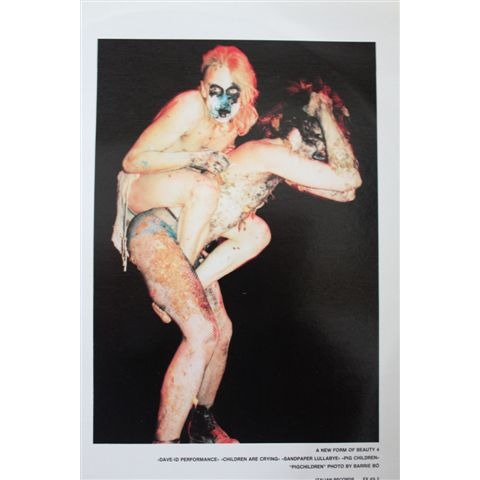
For a bunch of artistic, questioning, extrovert freaks like these guys, life was always going to be a bit different. They started life as a group of outsiders that coalesced into a sort of social club, interestingly including Bono and The Edge from that other Irish group. This loose gaggle adopted new names and started a performance group to express themselves (they also came up with the names of the aforementioned individuals – how many of you knew Bono was named after a brand of hearing aid?). The Virgin Prunes (which is Irish slang for a naïve individual) developed several different faces and as such are an unclassifiable act. They sadly got lumped in with the gothic movement by lazy UK music critics based on no more than the fact that they used heaps of hair-gel and wore make up. But then so did Motley Crue, right. The Virgin Prunes were way weirder than the pretense any gothic poser could ever put on. Their stage show was a Dadaist outing complete with props, performance art and cross-dressing. They put on multi-media exhibitions in art galleries. They played a close approximation of rock music on occasion and they made some of the most interesting process music ever recorded.

It’s that process music that I always go back to with them. Their more conventional music (and some of it was reasonably straight forward it has to be said) hasn’t aged so well. It still kicks 10 shades of shite out of almost everything “alternative” these days though so don’t get me wrong. But their in-the-studio creations are adventurous in the extreme, using everything from birds to iron bars to make their indefinable sounds. And silence too. They use silence better than anyone since Philip Glass.


A new form of beauty
The tracks I’m talking about exist across all their recordings but are mixed in with the more conventional stuff, so you’ll need to make a playlist. The studio half of the “Heresie” album has some seriously ethereal music mixed in with some Irish sing-alongs, noisy primal rock and other demented ramblings. The original box set came out as two 10 inch records with a handful of pamphlets containing surrealistic writing and nasty art work. Good luck finding a copy and no, you can’t buy mine. “A New Form of Beauty” is where the rubber really hits the road. This originally came out as a set again containing a 7 inch single, 10 inch EP and a 12 inch LP with a cassette thrown in for good measure. The whole thing acts as the soundtrack for the art installation that accompanied its release. I paid an absurd amount for it on eBay (sans cassette) before it was re-released on CD a few years back. It has a similar mixture of styles to Heresie, but the overall feel is much more claustrophobic and intense. It ranges from barely-moving, cracked-ambient, inner-space explorations like Abbagal, which are vaguely unsettling, to The Beast, which is as intense as hell and just flat out terrifying. Play that at maximum volume and watch the curtains start twitching in your neighbours place. I’ve done it. It’s fun.

But getting back on topic, for their best process music you have to go to the Over the Rainbow compilation. That ties up a lot of the loose ends and rarities they did as one-offs on long deleted compilations and cassettes. The notion of a group is blown away on these pieces and the creative collective takes over. The CD re-issue excludes the sleeve notes that accompanied the original LP release, so the descriptions of the processes they followed is absent. That’s a real shame because without them the tracks loose some of their wow! factor and they become merely absorbing and interesting instead. The two key tracks are Mad Bird in the Wood and Third Secret.

Over the rainbow
Since you won’t have the sleeve notes handy, here is what they roughly say about these two. Mad Bird in the Wood was recorded in their ramshackle studio in Dublin that featured a crumbling roof that allowed pigeons in to roost. Some of the pigeons would get inside and fly around the rafters looking for an escape route. The band came up with the idea of recording their fluttering with added ambient noise. So they slung a collection of microphones over the rafters and set them swinging so they would feedback off each other. Next they chased the birds through the swinging mics and rolled the tape. The resulting sounds were then played backwards and mixed with some additional electronic effects. End result – one of the most bizarre and ethereal pieces of music ever recorded. 

Third Secret is equally spontaneous. When they were installing the artworks for the New Form of Beauty exhibition they had to set up a bunch of scaffolding in the gallery to reach the ceiling. One of them came up with the idea of blind-folding themselves and climbing the scaffolding using nothing more than iron bars to feel their way up. The clanking of the bars on the scaffolding was recorded and mixed with some piano chords and whispered prayers. End result – surrealist sacred music serving as a comment on blind devotion. Salvador Dali would have loved it.

Like my homeboys, The Hopkinsville Goblins like playing around with found sounds and processes. They give it to me as a done deal. There’s plenty of it on Posts from Planet Earth. Their favourite instrument is the steel watering can on my kitchen window. It’s the first thing you hear on the album.

Posts from Planet Earth

Find it on Amazon, I-Tunes, Spotify, Deezer, Google Play and Bandcamp, or from any of the purveyors of fine sounds listed on this site.
Or try before you buy on Soundcloud or Youtube.


Tuesday, 20 September 2016

Who stole the rock'n'roll?


Whenever I can’t find something around the house I usually try to find someone else to blame for losing it. It’s one of those things. It’s always someone else’s fault isn’t it. Usually it’s sitting right in front of my nose if I could be bothered to look for it. Through a similar process the media can easily be blamed for the disappearance of artists, genres or even whole aspects of culture. Something is hot property for a while then it loses its mass appeal and it vanishes in front of your very eyes. It’s still there, hasn’t been wiped off the face of the earth, you just need to look beyond the obvious to find it - which is something most people can’t be arsed with. Rock’n’roll disappeared for about five years once in this very way.

Rock history has it that when the empire was being forged there was only one king of rock’n’roll, and that king was one Elvis Aaron Presley. Never mind that rock’n’roll had been around for a good old time prior to his discovery by down-home blues label Sun Records in Memphis. Thanks to this special combination, an underground music played by a segregated race of people in run down across-the-tracks clubs was suddenly on prime time TV and the sight of a white guy playfully gyrating his hips seriously offended middle-WASP America. So it is relayed in the book of Genesis in the bible of rock.

Most students of such tomes know the rest. By the end of the fifties Elvis got drafted, Buddy Holly died, Jerry Lee Lewis turned into a cousin-marrying pariah. The music biz came up with lame and tame crooners to take their place and that nasty rock’n’roll thing was deliberately ignored in the hope it would go away. Everything stateside returned to its pre-rock status quo until the British invasion forced rock back into the media eye again in the mid-sixties. Then rock musicians discovered LSD and things really went west (literally). But I’m getting ahead of myself.

The lesson for the congregation today is that, far from disappearing, rock in the early sixties survived and thrived back down in its underground home while Elvis was being paraded around in his uniform and Pat Boon was doing wimped-out Little Richard covers for the masses. And far from just retreating back to its original source, it expanded into a new home in the low-rent clubs of urban white America. It’s a neglected chapter of rock history but its well worth digging into. The original chitlin circuit that produced sensational early rockers like Little Richard and Ray Charles kept on keeping on as it always had and would later in the sixties provide the world with a certain James Marshall Hendrix. The urban white clubs, on the other hand, dispensed with the soul and instead picked up on the beat and the greasy/sleazy aspects of what rock brought to the table.

Las Vegas grind
A taste of what this side of American culture was like can be found in the recent and essential biography of Jerry Lee Lewis by Rick Bragg. Dodgy managers, we-never-close hours, pills, booze, sex and violence. The classic rock’n’roll stew. All in all, the perfect environment for the devil to do his work. Depending on which part of the states you are talking about, the adoption of sleazoid rock pushed country or jazz out, and the evening’s entertainment often included the addition of stage shows featuring strippers and/or stand up comedians. Jazz lived on through the addition of brass to the standard rock line up, and the drums were pushed more up front giving things an even more greasy big band sound. Think Las Vegas and New Orleans, LA and Houston. Anywhere people splashed money, got loaded and looked for a good time. Salt Lake City? Not so much.

It would be difficult to point out any one artist to represent all of this, since so much of it was going on under the radar. People might record a single or three, but the action was centred so much on the live show that the need to do hard work promoting a record was pointless.

Born Bad

There are a few compilation series that focus on this forgotten chapter of rock’n’roll, and you need to check them out, so get googlin’ (there are/were some great blogs around housing them). The Born Bad series, featuring gems like “Funnel of love” by Wanda Jackson, covers the rockabilly ground later popularised by The Cramps. Even better are the six Las Vegas Grind volumes, focussing more of the sleazoid club sounds described above. There are some real turkeys included amongst the gems, but that’s half the fun. This is taken to even wilder extremes by the Wildsville! and Wowsville! compilations that go beyond mere sleaze into certifiable madness. Listen to this stuff and then even try to think of a modern equivalent. Actually don’t bother – there isn’t any.

My little guys bring you a little teasin’ taste on “How much is that bust of Elvis in the window?” on the album. If the above sounds good to you, check it out. Just don’t forget your gigavator.

Posts from Planet Earth

Find it on Amazon, I-Tunes, Spotify, Deezer, Google Play and Bandcamp, or from any of the purveyors of fine sounds listed on this site.


Or try before you buy on Soundcloud or Youtube.

Monday, 15 August 2016

The image has cracked


People do messed up things when they’re drunk don’t they. Most times you get away with it with just a red face and some humble pie. Other times the effects are more long lasting. Take Steve Jones for example. The Sex Pistols gonzo guitarist was always destined for infamy of one kind or another, but the planets really lined up when the band was invited onto the Bill Grundy Today show on 1 December 1976 as a last minute replacement for Queen. Steve and crew were dumped in the hospitality room with free food and booze and no adult supervision. By the time the five minute call arrived Steve was well into his second bottle of wine.


As you can see, Bill Grundy himself was a jaded old windbag with nothing but contempt for the motley crew of urchins that soon draped themselves across his furniture, followed by a gaggle of equally dodgy looking supporters forming a ring behind them. One of said supporters is the soon-to-be-infamous-in-her-own-right Siouxsie Sioux, who quickly caught old Bill’s eye. After a gnarly clip of the band performing No Fun, some brief and fairly mindless banter with the band ensues, before Bill receives some lip from our Siouxsie when he turns his attention the supporter’s way. Not missing a beat he quickly fires a sleazy pass at her as a come back. That's the cue for Steve (who is obviously a gent deep down inside) to come to her aid with a volley of beepable bullets aimed directly at old Bill’s head, abetted by Bill himself giving it the old “is that all you’ve got” bravado. Quality entertainment! But not in 1976. The reaction in the press was just north of completely over the top. People just didn’t swear on the telly back then old bean.

From that moment on the otherwise invisible street phenomenon known as Punk Rock became tabloid fodder and became engraved in the history of the world as Bad Music played by Bad People.

The reality was that groups of young kids in Britain and America had been making music on a DIY level for at least two years prior to the Pistols appearance on the Grundy show, but none of them had a label for what they did. This was probably because each of these groups had quite different approaches to their creative endeavours. You couldn’t throw a net around them all and say “that’s punk rock” like you could two years later. In New York everything was centred on CBGBs where groups as varied as The Ramones, Suicide and Mink DeVille treaded the same boards, with the only similarity between them being that none of them sounded like Linda Rondstat. In Britain the Pistols were in the audience at 101ers gigs where pre-Clash Joe Strummer was playing lumpy R&B, while down the road polio victim Ian Dury was breaking all the rules by singing in cockney slang. Throbbing Gristle were melding primitive electronics with nihilistic performance art while up north Mark E Smith and the Fall were performing poetry pieces over simple Casiotone-and-guitar backing music. None of this was a threat to the established order and it probably would have stayed that way if Steve hadn’t hit the Blue Nun quite as hard in the Thames TV green room.

As Punk Rock had now been labelled as A Risk To Society it needed to be formally identified. The media obliged by defining Punk Fashion so that old ladies would know who to avoid in the street. Punk rockers themselves got into the football crowd mentality by defining their own take on the music, willingly supported by kingpins like Johnny Rotten who threw down the lines of acceptable punkness for everyone punk enough to follow (including members of his own band as it turned out). Anything identifiable as being un-punk was disparaged and banished from the new punk order. Trenches were dug in society around the new stink in town, protests were held, music was banned, letters flew at the editor. The end result on the street was if you were punk you were either in or out based on the simple recipe of having short fast songs with no guitar solos and no fancy words. That was the uniform and badge you wore. That and short hair. It was ironic that a DIY movement initially based on creativity and individuality was overtaken by an omnipresent facism that banished individual creativity in favour of mob rules.

So why are we worried? Well, we’re not really, but the lesson here is that unless you are determined, your attempts at individual expression will be threatened by turdheads with their own barrow to push. Not even muti-national corporate turdheads, but the turdheads in your very neighbourhood (I feel a song coming on, don’t you…).


For those who are interested in recordings made before punk became a dirty word there are a few recordings that are well worth checking out. The aforementioned 101ers and Ian Dury. The Fall. The initial output of The Damned, ATV and The Boys in the UK. Likewise The Ramones, Television and The Modern Lovers in the States. All high energy music providing all important teenage kicks without the unimportant Rules. Don’t get me wrong, all of the stuff produced during the initial punk explosion was vital music, and its impact went far and wide, but it became very derivative very fast and by 1978 was virtual self-parody. Fortunately there were enough creative geniuses in that first wave of punk to move on into completely new territory without getting bogged down. Some astonishingly good music was recorded in the period 1978-1982 in all different corners of the world.

It’s geniuses like those that eliminate the gravity that might otherwise hold the Hopkinsville Goblins down. How high do they fly? Check out the links below and judge for yourself:


Posts from Planet Earth


Get it on Amazon, I-Tunes, Spotify, Deezer, Google Play and Bandcamp, or from any of the purveyors of fine sounds listed on this site.

Or try before you buy on Soundcloud or Youtube.